

CLEAN WATER HELPS TRANSFORM COMMUNITIES IN WEST AFRICA
When Richard saw an announcement for a short-term missions trip to assess wells in West Africa, he said, “It instantly struck a chord with me. I saw it and I thought, ‘I could do that.’ And sometimes when God puts things on your heart straight away, you know? Yeah, that’s me. I could see how I would fit into that slot.”
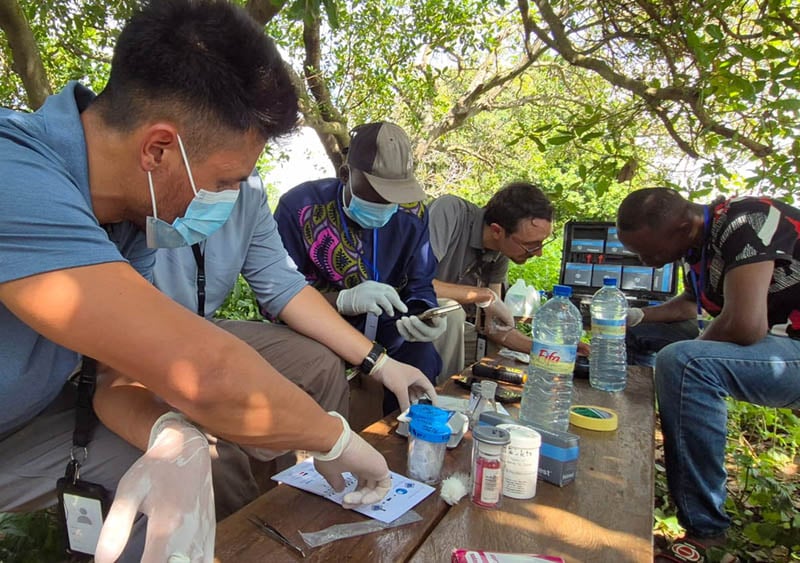 |
Richard had been a project manager for 38 years with Rolls-Royce’s Nuclear Division in the UK, where he worked on various projects for submarines.
“I was really honored to be able to go on this trip and serve,” Richard said, “and to use the skills that God had given me, both in the secular world and in Christian ministry.”
The short-term team consisted of 12 people of different ages, backgrounds, and skillsets from the US, UK, Ghana, Hong Kong, South Africa, and the Netherlands.
The three-week trip was led by Wim, who oversees Reach Beyond’s community development projects in the region. He explains, “During the past 10 years, we’ve helped our partner install over two dozen wells in that country. We wanted to take a moment to objectively assess everything we had been doing. We wanted to look at the current conditions of the wells and to gauge their impact on the community, both physically and spiritually. We also wanted to learn if there are things that could help us better do projects throughout the region in the future.”
The remoteness of the wells meant many hours of travel in vans, 4x4s, and occasionally even motorbikes.
Richard was the oldest on the team, which granted him special privileges. “I actually got the best seat in the car, which is usually up front, and that tends to be the most scary one. But more than that, it meant I was privileged to meet with village chiefs and elders of the communities, and to speak in a couple of churches as well. That was a real privilege. It was a real blessing to me.”
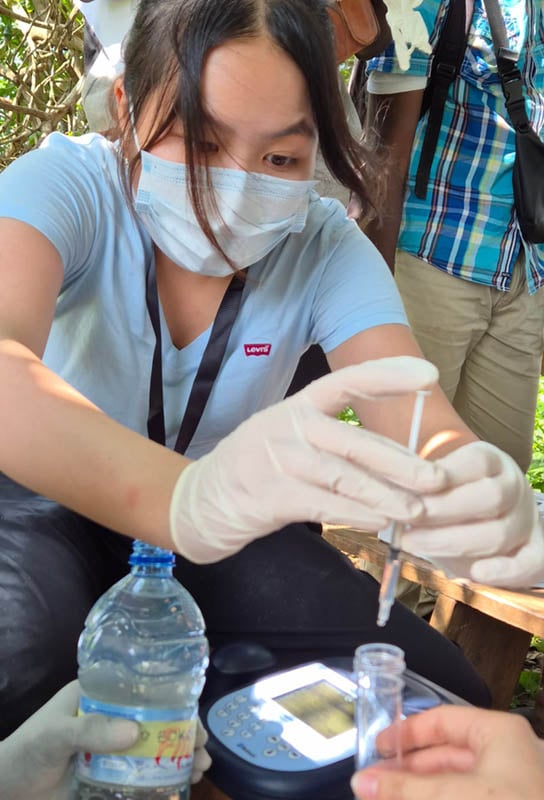 |
The team inspected the physical structure of each well and documented its condition. They also gathered water samples and performed tests which included using a portable mass spectrometer that can analyze water for minerals, organic matter, and contaminants on a molecular level.
Team members also assessed the social and spiritual impact of the wells by talking with villagers, pastors, and leaders in each community. All of the data was recorded using a special app on their mobile phone for further analysis.
Whenever members of the team weren’t busy gathering data, they were encouraged to walk through the community and pray.
REACHING THE RESISTANT
Reaching unreached people is rarely easy. Many of our partner’s evangelists have been met with resistance. They’ve even been chased out of villages and warned to never come back, and told that if they do, they will be killed.
Yet our partners are undeterred by such threats. These are the communities that God has called them to—the hard places—the ones that need to hear the Gospel the most.
Successfully reaching resistant villages, however, requires a different approach. By offering to help a community dig a well, our partner’s evangelists are able to gain access to a community and begin demonstrating the Gospel.
Richard recalls a conversation at one of the first villages they visited. “The chief said to me, ‘We are so grateful for how they keep coming back, and are looking after us, and are concerned about our welfare, because the authorities completely neglect us.’ And that’s the real positive witness of what God is doing, and how just through relationship, you can actually enhance the Gospel.”
Richard says, “The wells have actually provided an ideal platform to spread the Gospel. I mean, it’s almost certainly not an easy thing, but it’s an obvious linkage, isn’t it? And in most cases, the church would be within the close proximity of the well, which provides a real springboard for the Gospel—to make that connection between living water and physical water.”
 |
MEANINGFUL SOCIAL IMPACT
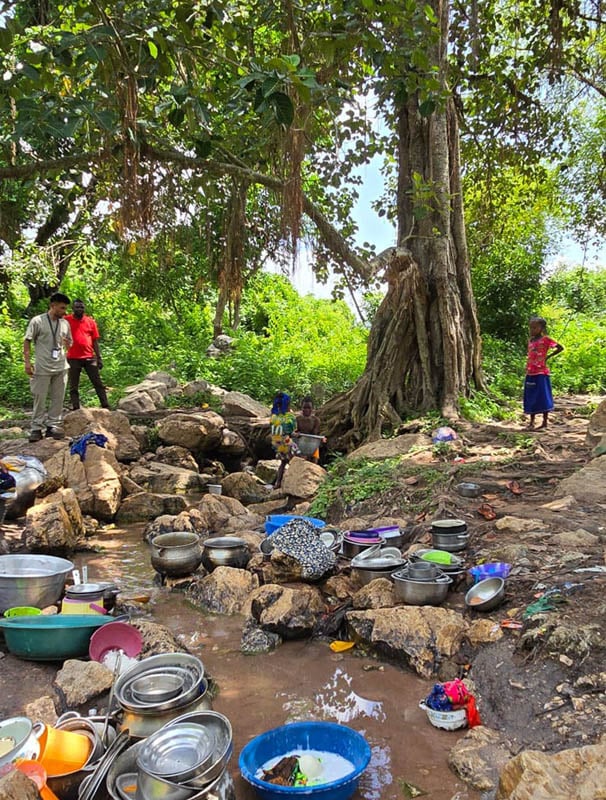
One village described how they used to war with a neighboring tribe over a particular water source. Today they share a well.
In other villages, elders told how their women used to fight amongst themselves over limited access to water at streams. They’ve seen how the wells have brought about much more social cohesion and harmony.
Richard says, “They believe it’s because families now have more time to actually be together. They’re not having to walk such great distances to get water. So there seems to be much more interaction, quite significantly, between the children and the mothers. It is real community living, and you observe how everybody seems to help one another.”
While it was difficult to gather precise data about a well’s health impact, everyone agreed that it has drastically reduced the incidence of water-borne diseases and sickness in their village.
TRANSFORMED BY THE GOSPEL
The biggest impact of the wells has been the spiritual transformation that happens through the Gospel.
Most of the wells were put in communities where there were no believers before the project began.
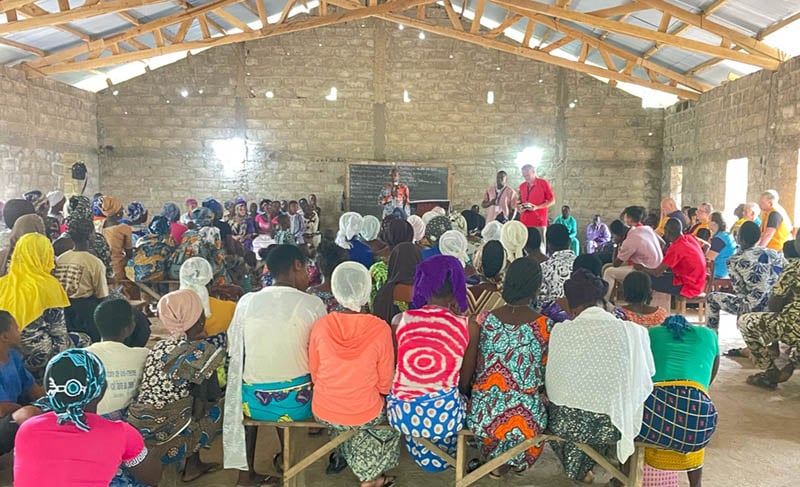 |
By the time the well is inaugurated, there will almost always be at least one believer—sometimes many more.
Our partners will continue working in each village until they have planted a church that can stand on its own.
Some villages now have dozens of believers, others have hundreds. The village where Reach Beyond first helped place a well 10 years ago has grown to nearly a thousand people following Jesus, led by a pastor who has come out of that same community.
Richard says, “There’s now a real joy in these communities. You could see a joy within the people who were influenced by the church and the Christians in there. You could sense it and you could see joy in people’s faces as well. The joy of the Lord always shines through.”
Colorado Springs, CO 80949-9800
800.873.4859