

MENU
(July 28, 2015 - by Ralph Kurtenbach) When a million people show up, a journalist should not ignore it.
The visit to Ecuador by Pope Francis was to newsman Edwin Chamorro “the event of the year” in a country where some 80 percent of the population professes Roman Catholic belief.
“They will need information,” said Chamorro who coordinates the news operation at Radio Station HCJB. Known as the Voice of the Andes, its main operation is in Ecuador’s capital, Quito. “Many of those who listen to us are Catholic,” he said.
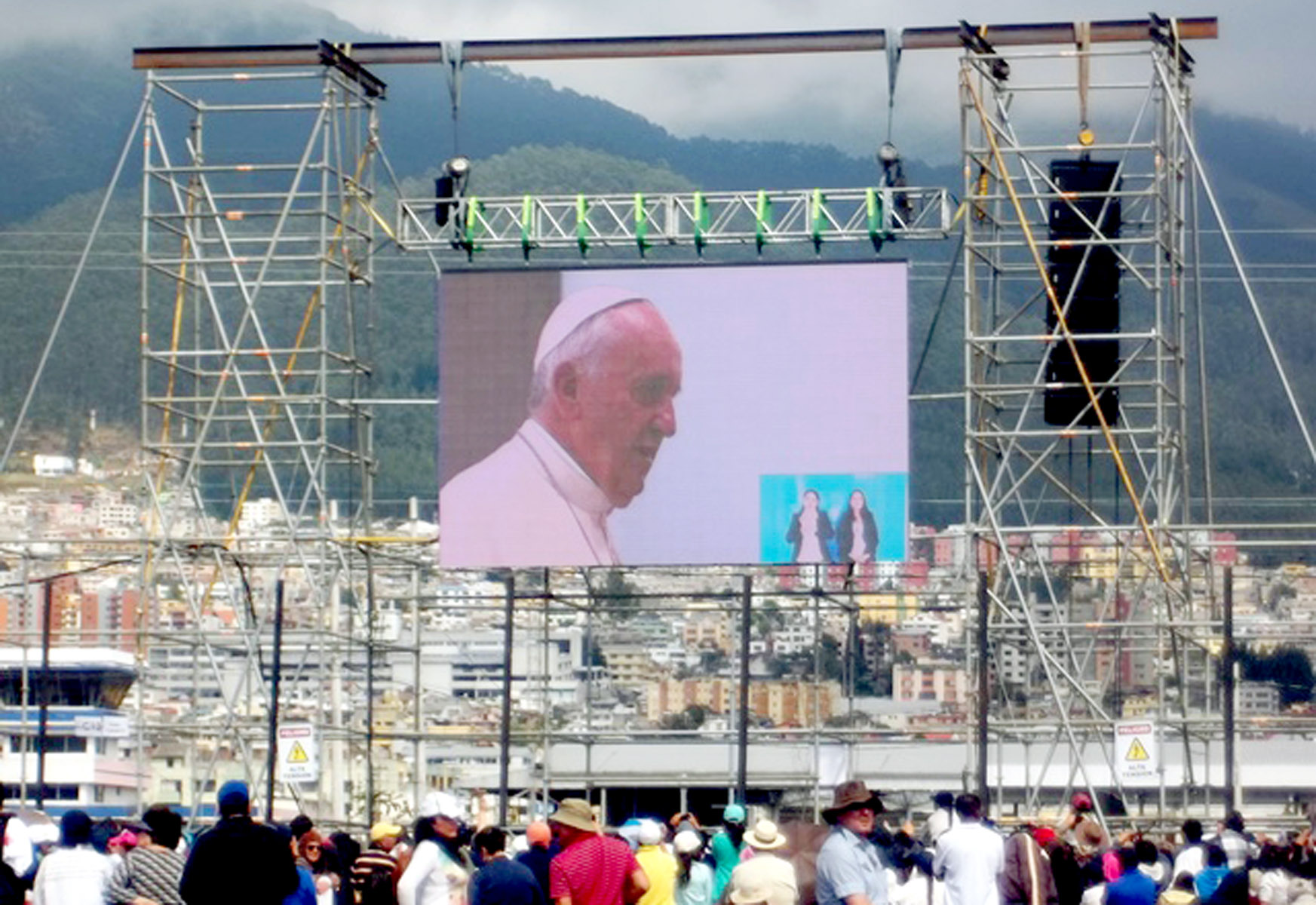 Prior to the July 5-8 papal visit by Jorge Mario Bergoglio (or Pope Francis), the first-ever South American to head Catholicism, Chamorro had raised questions with fellow staff members about coverage on Radio Station HCJB, a ministry of Reach Beyond.
The Ecuadorian newsman said that one central point involved the station’s response if it were to receive an official directive for wall-to-wall coverage of Francis’s visit. Chamorro remembers that in 1985 “the Ecuadorian government required all media to carry the syndicated programming of the events of Pope John Paul II.”
In response, HCJB—decidedly evangelical since it first took to the airwaves in 1931—shut down for two days of equipment maintenance, he said.
Chamorro, then working with a campus ministry, joined the HCJB news team two years later in 1987. A graduate of the social communication program at Central University in Quito and highly athletic, he initially thought of being a sports journalist. While this is part of his present job, his work is varied and has taken him into such fields as politics (including coverage of protests, riots and coups), the environment and cultural appreciation.
The administration of Ecuadorian President Rafael Correa took view different to that of former President León Febres Cordero for coverage of the pope’s visit in 1985.
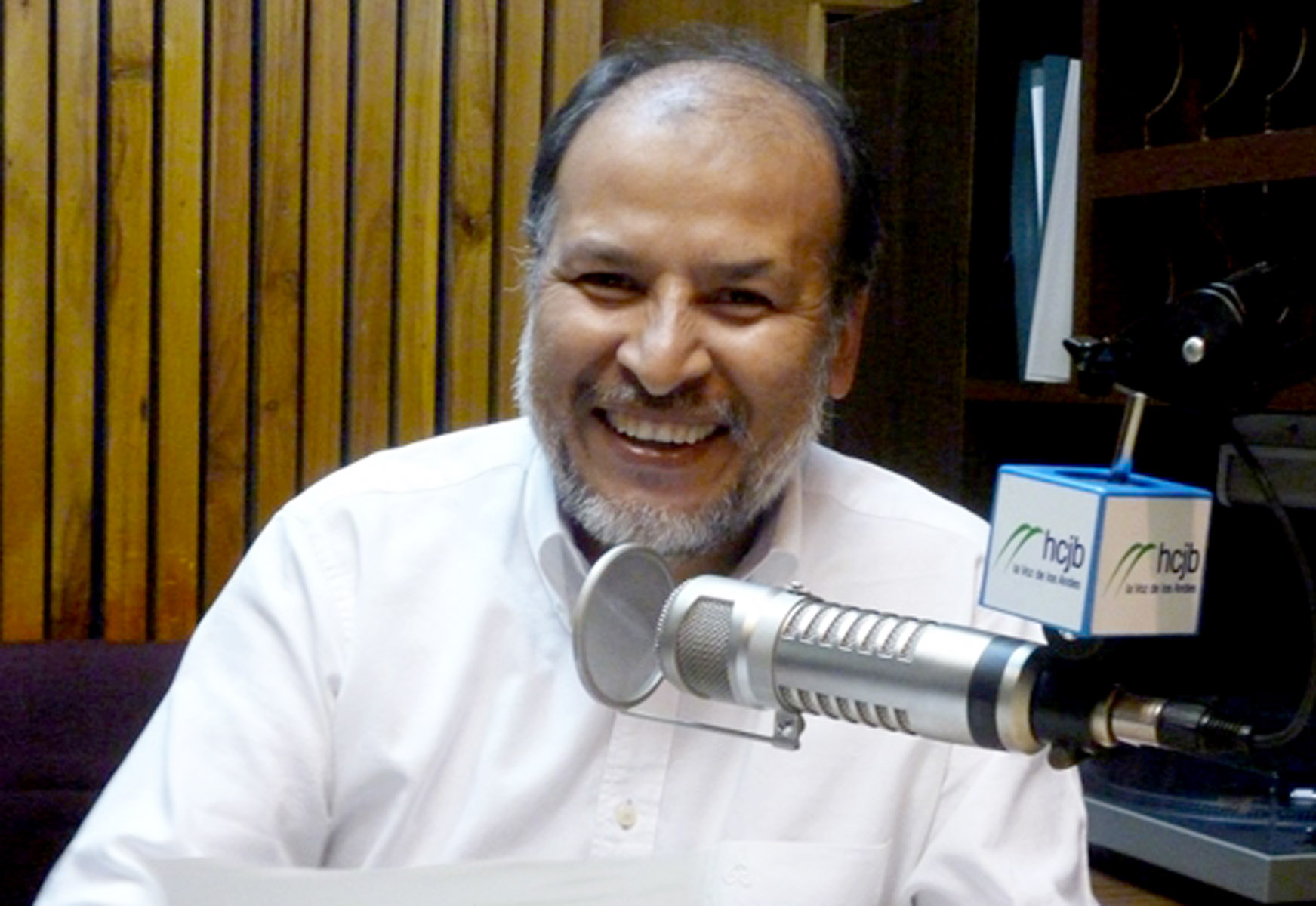 Given self-determination on the coverage, Chamorro found things had were easier by comparison with obligatory coverage. He did not, for example, need to supply his reporters’ credentials to government officials in order to acquire press passes. In addition, the station’s vehicles might have needed press credentials due to the imposition by authorities of severely restricting travel throughout Quito on July 6-7.
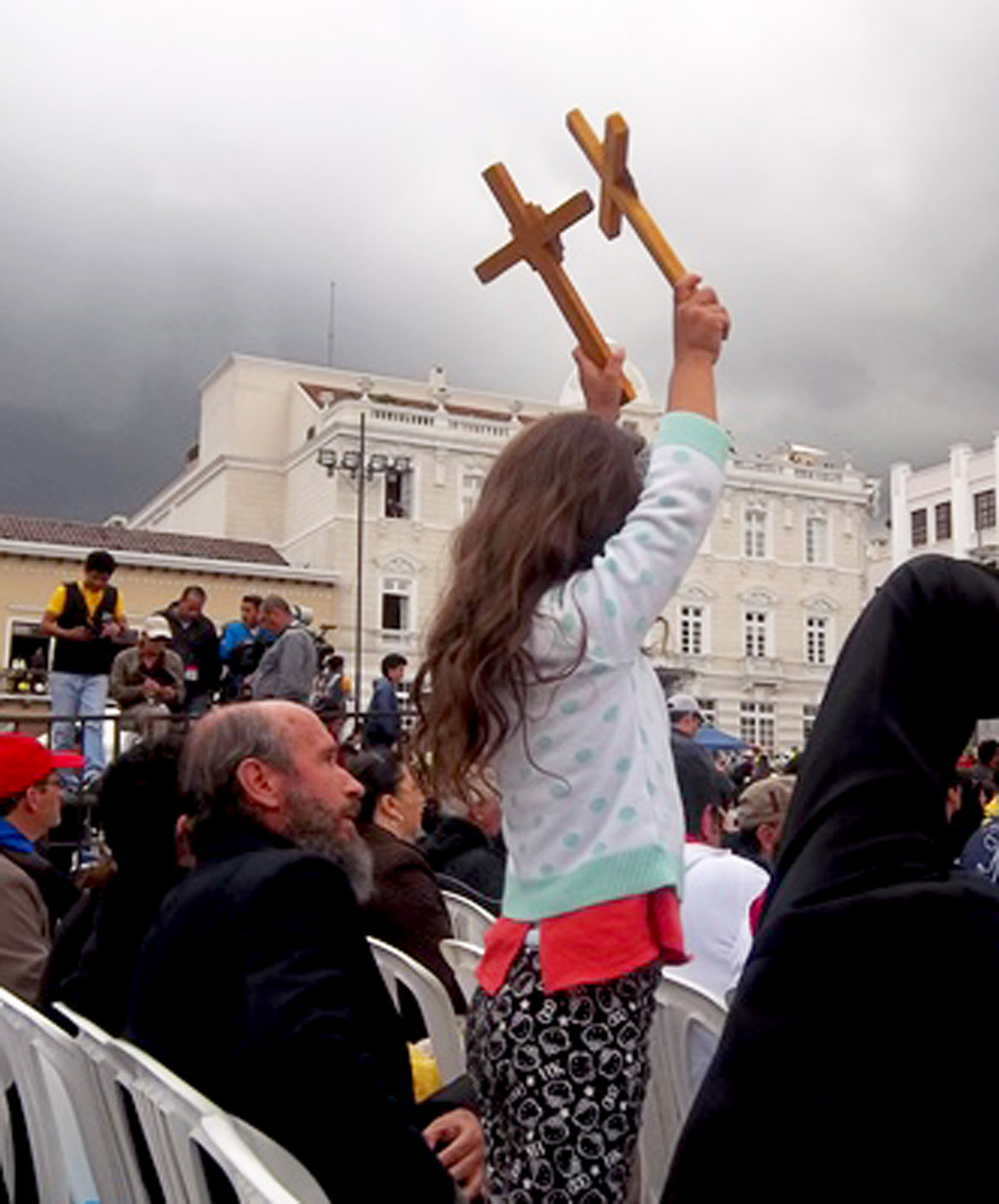
Those who gathered in Parque Bicentenario (Bicentennial Park) in Quito on Tuesday, July 7, were estimated by officials at half a million, according to an Associated Press report an hour before an outdoor Mass. The Quito-based network Teleamazonas, however, screened “more than 900,000” during a replay of the service. Attendees arrived on foot at the park in north Quito, formerly the site of the capital city’s international airport north of HCJB.
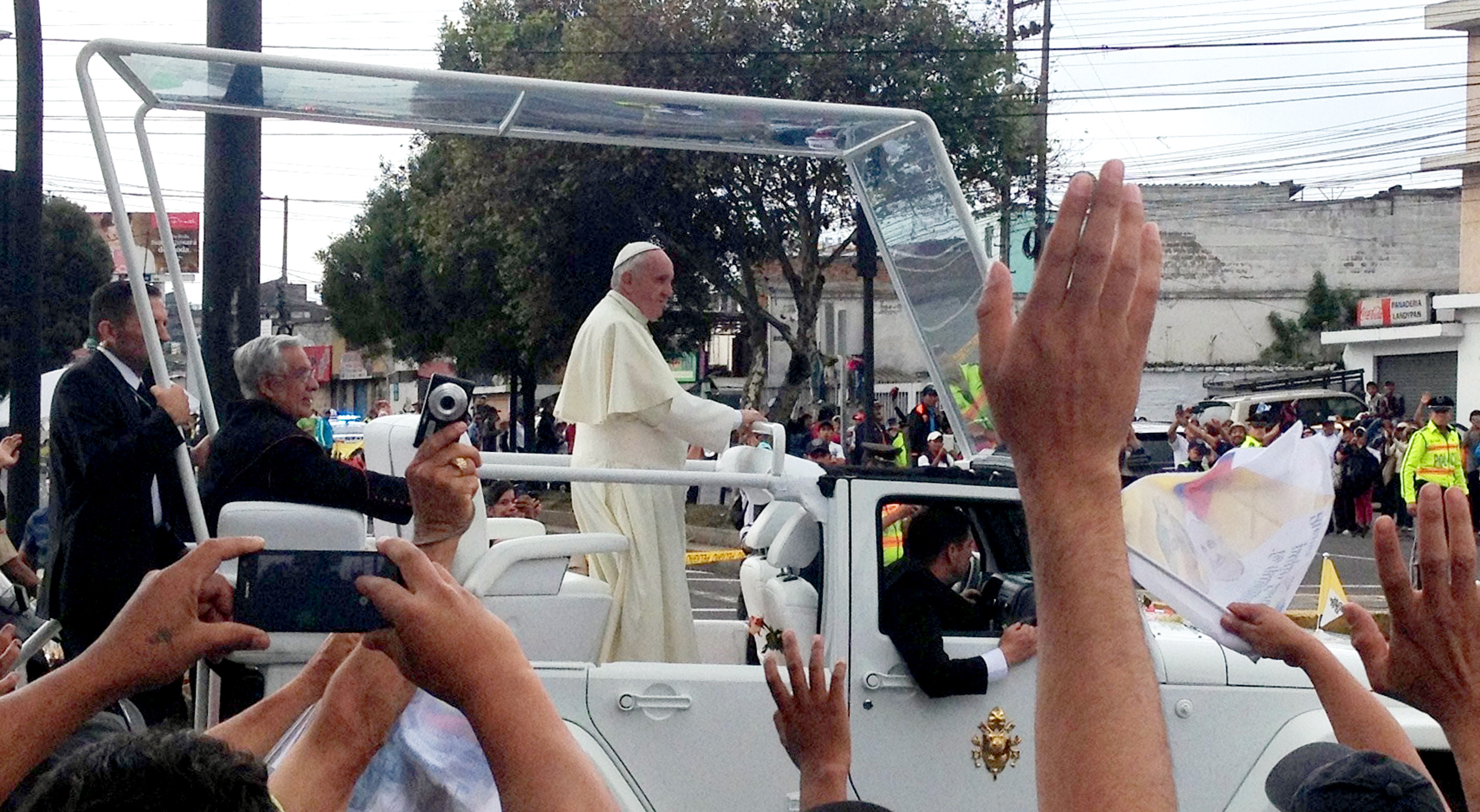
So it was that the station’s coverage was handled without dispatching reporters for the pope’s arrival at Quito’s new airport or for a mass on Monday, July 6, in Guayaquil, Ecuador’s largest city. Nor did HCJB reporters shadow Pope Francis to many other events, such as visits to the Pontifical University of Ecuador, the Church of San Francisco and the national Marian shrine in El Quinche near the capital.
 Chamorro viewed the coverage as informative without conveying to listeners an endorsement of practices and teachings that differ from evangelical thought. “This is not to say that we gave a distorted view of faith or of the message of the gospel,” offered Chamorro. “But our reports were concise and respectful in telling of those events. Within the context, we were offering reports.”
Audio of the two-hour Quito Mass was easily accessed from the station’s newsroom using resources provided by Ecuador’s public media, a burgeoning sector under the Correa administration with television, radio, newspaper (digital and traditional print) and a news agency since 2007.
On Wednesday, July 8, the station’s morning newscast led with a three-minute segment of the pope’s homily—a long audio actuality by newscasting norms. It was central to a report lasting nearly seven minutes. Afterwards, another 90 seconds announced traffic changes. Altogether, nearly 30 percent of the half-hour morning news block that day addressed the pope’s visit.
The news segment represented, however, only a small fragment of religious events in Ecuador during the pope’s first visit to the South American country in 30 years. Furthermore, it was not a solitary coverage of papal comments, according to Chamorro.
 “In another occasion, we transmitted his comments,” he said, “when the pope apologized to the Waldenses Protestants [in late June].” The group, originating in France, was declared heretical in the 13th century by the Roman Catholic Church and subject to intense persecution. By the 17th century the group was nearly annihilated.
“The Waldenses in Latin America are considered historic Protestants from the era of Martin Luther,” continued Chamorro. “It seemed important for evangelicals to be able to hear him ask forgiveness, and we broadcast that as well.”
One popular program early in HCJB’s history was done by a former Catholic priest, Manuel Garrido Aldama. His work with the station began in the late 1930s. He had been raised in Spain by devout Catholic parents, whose aspirations for him were fulfilled when he was ordained into the priesthood.
According the book, Seeds in The Wind, detailing the history of HCJB, “doubts and fears still assailed his heart, and finally he felt led to leave the Roman Catholic Church. Then, sometime after this important step, he found the Lord as his own personal Savior.” He furthered his religious education in Scotland.
“With his beautiful Spanish, his deep understanding of the Roman religion and Latin culture, very quickly Aldama’s 15-minute breakfast program, Luz Cotidiana (Daily Light), was drawing the largest listener response,” wrote Lois Neely in Come Up to This Mountain, another book about the station’s history.
Clarence Jones, one of the station’s cofounders, wrote that “by steering clear of all political issues, HCJB has emphasized its neutrality in the internal affairs of the country and underlined the sincerity of its position as a beneficial national institution.”
“By proclaiming a positive message of the gospel of Jesus Christ in programs based on the Bible themes of the Blood, the Book and the Blessed Hope,” Jones continued, “HCJB has focused the attention of its listeners upon the Redeemer Himself, and not upon the controversial issues of one religion over another.”
Throughout Latin America, what offers competition to the region’s traditional religion Catholicism are so-called “garage churches”—similar to storefront churches in North America, according to a CNN report. It cites Pew Research Center statistics that across the region in 1970, 92 percent were Catholic, but that number has since dropped to 69 percent.
In that same period, Protestant congregations were on the increase. Pew research indicates that Protestants numbered just 4 percent in 1970, increasing to 19 percent today.
Photo credit (cover/homepage): AFP/Getty Images
Sources: Reach Beyond, CNN, Seeds in the Wind, Come Up to This Mountain, Radio: The New Missionary
The visit to Ecuador by Pope Francis was to newsman Edwin Chamorro “the event of the year” in a country where some 80 percent of the population professes Roman Catholic belief.
“They will need information,” said Chamorro who coordinates the news operation at Radio Station HCJB. Known as the Voice of the Andes, its main operation is in Ecuador’s capital, Quito. “Many of those who listen to us are Catholic,” he said.
Prior to the July 5-8 papal visit by Jorge Mario Bergoglio (or Pope Francis), the first-ever South American to head Catholicism, Chamorro had raised questions with fellow staff members about coverage on Radio Station HCJB, a ministry of Reach Beyond.The Ecuadorian newsman said that one central point involved the station’s response if it were to receive an official directive for wall-to-wall coverage of Francis’s visit. Chamorro remembers that in 1985 “the Ecuadorian government required all media to carry the syndicated programming of the events of Pope John Paul II.”
In response, HCJB—decidedly evangelical since it first took to the airwaves in 1931—shut down for two days of equipment maintenance, he said.
Chamorro, then working with a campus ministry, joined the HCJB news team two years later in 1987. A graduate of the social communication program at Central University in Quito and highly athletic, he initially thought of being a sports journalist. While this is part of his present job, his work is varied and has taken him into such fields as politics (including coverage of protests, riots and coups), the environment and cultural appreciation.
The administration of Ecuadorian President Rafael Correa took view different to that of former President León Febres Cordero for coverage of the pope’s visit in 1985.
Given self-determination on the coverage, Chamorro found things had were easier by comparison with obligatory coverage. He did not, for example, need to supply his reporters’ credentials to government officials in order to acquire press passes. In addition, the station’s vehicles might have needed press credentials due to the imposition by authorities of severely restricting travel throughout Quito on July 6-7.Those who gathered in Parque Bicentenario (Bicentennial Park) in Quito on Tuesday, July 7, were estimated by officials at half a million, according to an Associated Press report an hour before an outdoor Mass. The Quito-based network Teleamazonas, however, screened “more than 900,000” during a replay of the service. Attendees arrived on foot at the park in north Quito, formerly the site of the capital city’s international airport north of HCJB.
So it was that the station’s coverage was handled without dispatching reporters for the pope’s arrival at Quito’s new airport or for a mass on Monday, July 6, in Guayaquil, Ecuador’s largest city. Nor did HCJB reporters shadow Pope Francis to many other events, such as visits to the Pontifical University of Ecuador, the Church of San Francisco and the national Marian shrine in El Quinche near the capital.
Chamorro viewed the coverage as informative without conveying to listeners an endorsement of practices and teachings that differ from evangelical thought. “This is not to say that we gave a distorted view of faith or of the message of the gospel,” offered Chamorro. “But our reports were concise and respectful in telling of those events. Within the context, we were offering reports.”Audio of the two-hour Quito Mass was easily accessed from the station’s newsroom using resources provided by Ecuador’s public media, a burgeoning sector under the Correa administration with television, radio, newspaper (digital and traditional print) and a news agency since 2007.
On Wednesday, July 8, the station’s morning newscast led with a three-minute segment of the pope’s homily—a long audio actuality by newscasting norms. It was central to a report lasting nearly seven minutes. Afterwards, another 90 seconds announced traffic changes. Altogether, nearly 30 percent of the half-hour morning news block that day addressed the pope’s visit.
The news segment represented, however, only a small fragment of religious events in Ecuador during the pope’s first visit to the South American country in 30 years. Furthermore, it was not a solitary coverage of papal comments, according to Chamorro.
“In another occasion, we transmitted his comments,” he said, “when the pope apologized to the Waldenses Protestants [in late June].” The group, originating in France, was declared heretical in the 13th century by the Roman Catholic Church and subject to intense persecution. By the 17th century the group was nearly annihilated.“The Waldenses in Latin America are considered historic Protestants from the era of Martin Luther,” continued Chamorro. “It seemed important for evangelicals to be able to hear him ask forgiveness, and we broadcast that as well.”
One popular program early in HCJB’s history was done by a former Catholic priest, Manuel Garrido Aldama. His work with the station began in the late 1930s. He had been raised in Spain by devout Catholic parents, whose aspirations for him were fulfilled when he was ordained into the priesthood.
According the book, Seeds in The Wind, detailing the history of HCJB, “doubts and fears still assailed his heart, and finally he felt led to leave the Roman Catholic Church. Then, sometime after this important step, he found the Lord as his own personal Savior.” He furthered his religious education in Scotland.
“With his beautiful Spanish, his deep understanding of the Roman religion and Latin culture, very quickly Aldama’s 15-minute breakfast program, Luz Cotidiana (Daily Light), was drawing the largest listener response,” wrote Lois Neely in Come Up to This Mountain, another book about the station’s history.
Clarence Jones, one of the station’s cofounders, wrote that “by steering clear of all political issues, HCJB has emphasized its neutrality in the internal affairs of the country and underlined the sincerity of its position as a beneficial national institution.”
“By proclaiming a positive message of the gospel of Jesus Christ in programs based on the Bible themes of the Blood, the Book and the Blessed Hope,” Jones continued, “HCJB has focused the attention of its listeners upon the Redeemer Himself, and not upon the controversial issues of one religion over another.”
Throughout Latin America, what offers competition to the region’s traditional religion Catholicism are so-called “garage churches”—similar to storefront churches in North America, according to a CNN report. It cites Pew Research Center statistics that across the region in 1970, 92 percent were Catholic, but that number has since dropped to 69 percent.
In that same period, Protestant congregations were on the increase. Pew research indicates that Protestants numbered just 4 percent in 1970, increasing to 19 percent today.
Photo credit (cover/homepage): AFP/Getty Images
Sources: Reach Beyond, CNN, Seeds in the Wind, Come Up to This Mountain, Radio: The New Missionary
P.O. Box 39800
Colorado Springs, CO 80949-9800
800.873.4859
Colorado Springs, CO 80949-9800
800.873.4859