

(Sept. 2, 2011 - by Ralph Kurtenbach) Two mission hospital physicians have published the results of a major investigation into different viruses that sickened Ecuadorian patients with flu or flu-like illnesses.
Dr. Wilson Chicaiza, an Ecuadorian physician, and Dr. Richard Douce, a U.S. citizen, provided the medical community with the most extensive
 |
| Dr. Wilson Chicaiza |
documentation of the viral causes of influenza-like illnesses (ILI) in Ecuador. Highlighting the study's significance, the pair of doctors posited that "tropical countries are thought to play an important role in the global behavior of respiratory infections such as influenza."
Central to the study was whether Ecuador was a source of epidemics or if the Andean country, as Douce asked, "was simply a stopping-off place as the wave of epidemic flu circulates through the world?"
"Our data suggests the latter," he concluded.
Related to this, the study also discounted the term "flu season" to describe periodic flu outbreaks. "Influenza comes from the Italian phrase describing the influence of the moon and stars upon health (influenza della luna e le stelle sulla salute)," Douce explained. "Even now people state that it's been a cold month, and that's why we have more influenza. I don't think that is the truth."
The results of the Chicaiza and Douce investigation were published by PLoS ONE which is offered online by the Public Library of Science (hence the acronym PLoS). The online publication gives reports of scientific studies that are reviewed by peers and then made available as open-access resources.
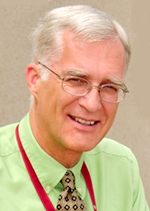 |
| Dr. Richard Douce |
Chicaiza directs medical education at HCJB Global Hands' Hospital Vozandes-Quito (HVQ) while Douce, an infectious diseases specialist, serves as medical director of the 76-bed facility. The hospital serves as a sentinel site in Ecuador for the detection of the H1N1 virus and other emerging strains of influenza, providing data to the U.S. Navy Tropical Disease Research Laboratory in Lima, Peru. HVQ also facilitated a reporting site at Hospital de la Beneficencia (the nation's largest hospital) in Guayaquil by providing Navy doctors with appropriate contacts there.
"It is exciting to me because this has been part of my life since I was a resident (at HVQ)," said Chicaiza. "I got interested and began to collect data over the years, and now finally we have published the article."
Flu cultures from the Ecuador hospitals were sent to Lima for registry with the U.S. Navy laboratory, then to the Centers for Disease Control and Prevention in Atlanta and the World Health Organization. Along with the cultures, bedside rapid tests from the patients were done, allowing doctors to identify Influenza A or B within 10 minutes. (Genetically different strains of both influenza A and influenza B were present.)
During the study, six outbreaks of influenza occurred in Quito with just a smattering of cases identified in Guayaquil. Then in late 2008 and early 2009, more cases were documented in Guayaquil with just a few Quito cases. Flu surveillance in Ecuador in the last several years has confirmed the existence of both H1N1 (often referred to as "swine flu") and another flu subtype, H3N2, at the hospital.
"Out of 1,702 cases of ILI, nine viral agents were detected in 597 patients," Douce and Chicaiza wrote. "During the time of the study, seven genetic variants of influenza circulated in Ecuador, causing six periods of increased activity."
More varieties of viruses seem to have occurred in Guayaquil than in the Andean city of Quito where the altitude is about 9,300 feet. Although the study was not designed to compare differences in incidence (or "burden") of influenza, the findings suggest differences between the cities in the etiology of ILI.
 "In warm, humid environments, contact appears to be more important for influenza transmission," the authors wrote. "But aerosol transmission may become important in cool, dry environments as shown by studies of guinea pigs separated in cages that demonstrate the risk of airborne infection can be calculated by measuring environmental factors like absolute humidity and temperature." To determine if altitude affects influenza cases in tropical climates, further study would be required, Chicaiza and Douce concluded.
Chicaiza expressed satisfaction in contributing to a better understanding of influenza in Ecuador, even as he anticipates the study may open doors to further investigations. "Seeing the possibility to do intra-institutional investigations in our work, with support from others, gave me a lot of incentive to push on with the investigation," he said. As Ecuador's Ministry of Health establishes research models to learn more about respiratory infections, Chicaiza said he's thrilled that the ministry consulted with him on HVQ's research.
To download the paper as a pdf, visit http://dx.plos.org/10.1371/journal.pone.0022206.
Source: HCJB Global
Colorado Springs, CO 80949-9800
800.873.4859