

MENU
 |
| Members of InterSearch evaluate future of media in ministry |
Admittedly, a dozen international Christian broadcasters who recently attended a conference in Colorado Springs, Colo., left with more questions than answers. But they collectively agreed that having accurate, objective research is critical to the future of Christian media.
"Research helps us better focus on the content of the programs, when we air them and which delivery systems we use," explained Roger Stubbe, an administrative assistant for InterSearch and a consultant for HCJB Global. The mission, together with TWR, hosted the annual meeting of InterSearch-a consortium of international broadcasters, denominational ministries and independent program producers-Feb. 6-8.
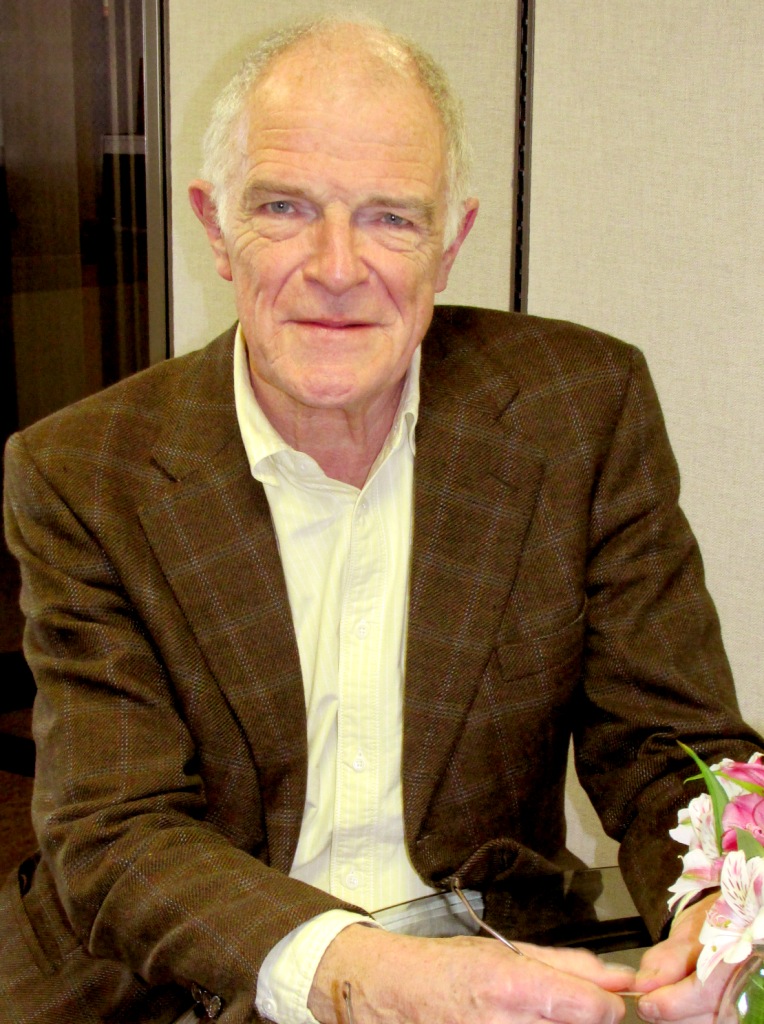 |
| Graham Mytton, co-founder of InterSearch |
Participants came from four countries (U.K., Finland, Sweden and U.S.), representing six organizations, Feba Radio, FEBC, TWR, AWR, IBRA Media and HCJB Global.
"We want to maximize the impact of the broadcasts," Stubbe said. "Why would you want to put all your effort into women's programs, for example, when you find out that women aren't using the media at all or using other media? What are the listeners' interests? If they have no interest in sports, why try to draw them with a sports program?"Obtaining data on media use at a reasonable price, however, has been a growing challenge for the group. "The process has changed," Stubbe related. "It has taken nearly a year to work through the details, and it will cost considerably more to get this information. Working through all the bureaucracy can be problematic."
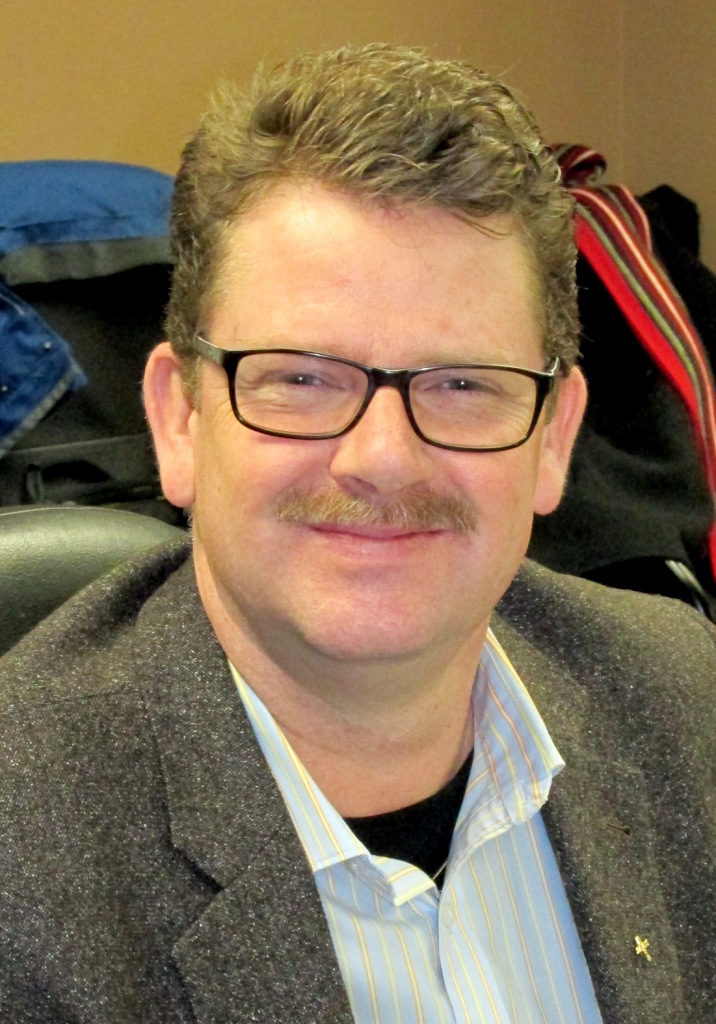 |
| Svante Hektor, chairman of InterSearch |
"For the first time in 21 years we didn't have available and ready research data this last year," added Graham Mytton, a British semi-retired consultant and former head of international audience research at the BBC who helped found InterSearch in 1992. His goal was to help mission broadcasters save money on audience research and encourage them to share and interpret the data.
Attendees were especially impressed with the presentation, "Ten Things You Didn't Know About World Missions," given by John Lewis of OC International.
"He showed how missionaries have helped spread the gospel in the last 100 years-very encouraging," said Svante Hektor, chairman of InterSearch and director of training at Sweden-based IBRA Media. "It's not just research on knowing our audiences, but also learning about new scenarios-what new devices people are using and how they work."Lewis told about the continued trend to urbanization as the number of megacities worldwide continues to escalate. "How will we as broadcasters connect relevantly with people in urban areas?" Hektor queried.
One surprising statistic was the number of people who said they had no religious affiliation-what researchers call "nones." The number of nones reached 16 percent in 2010, up from just 2 percent in 1950.
"What's striking is that for those 65 or older, the number of nones is below 10 percent," Stubbe said. "But for the age group 18 to 39, it's 32 percent. Men are 50 percent more likely to be nones than women. One in six people worldwide are nones. Where are they? Mainly in Asia Pacific (especially China) and in Europe. Meanwhile, non-Westerners are also embracing religious faith in increasing numbers. World population expansion is expected to level out by 2040."
Hektor added that attendees were interested in how to use digital media in spreading the gospel. "How, for example, do we measure the success of Internet-based media? That's something we need to explore."
Mytton said he still sees an important role for shortwave, especially for audiences in remote areas or in countries where the media is highly controlled by the government. "However, the Internet is a fantastic medium that can do almost anything you want. It's a huge resource that we not have imagined 20 years ago. Where does Christian media fit into all that?"
"Navigating on a mobile device is already far more important than the Internet, and it will probably remain so," he added. "It doesn't rely on landlines; it uses satellite. We need to be updated with what is going on. For example, can people afford to access streaming audio? It's not only what people have, but what do they do with what they have."
"Research isn't the answer to everything," Stubbe added, but it's a tangible way to determine who's listening. "It's a way to show those people who support and pray for our ministry that there are indeed people listening, showing that their investment is worthwhile."
Hektor added that the most important take-away for participants was the reminder to use all means possible to reach a needy world for Christ. "The event opened our eyes again to what God is doing and how we as media organizations can be used to build His kingdom," he concluded.
Organizers are already preparing for InterSearch's next annual meeting, again planned for Colorado Springs in February 2014.
P.O. Box 39800
Colorado Springs, CO 80949-9800
800.873.4859
Colorado Springs, CO 80949-9800
800.873.4859