

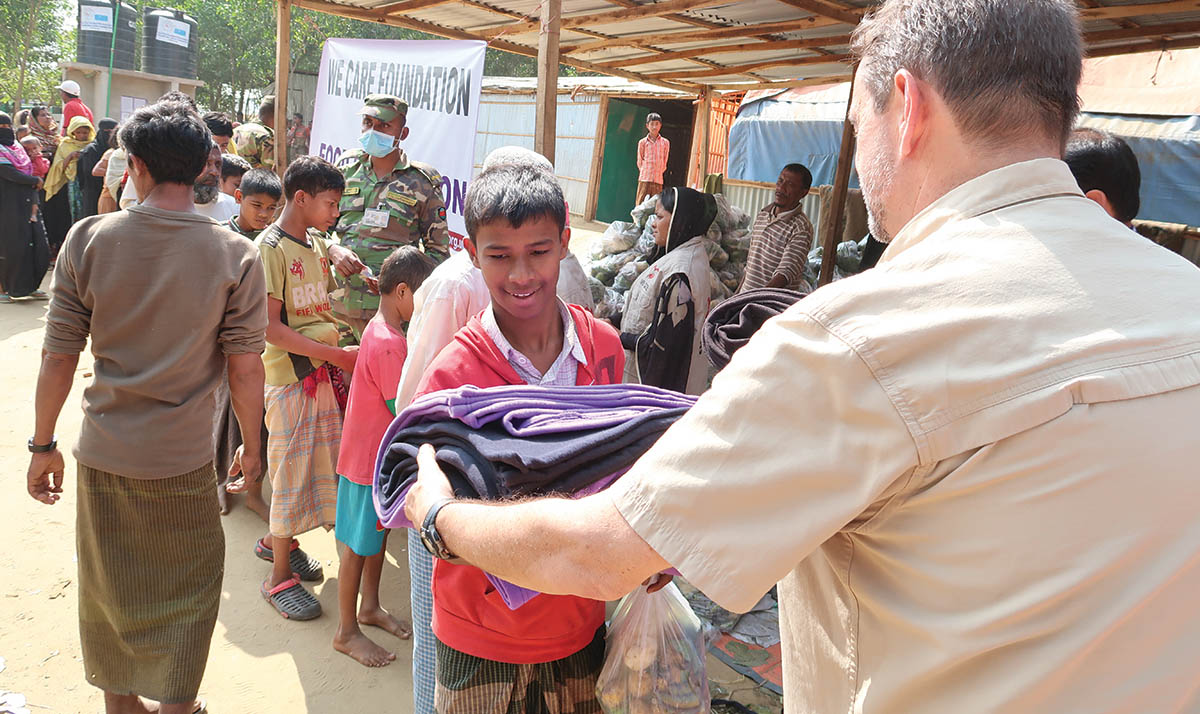
 The bamboo and tarp tents blanket the hillsides as far as the eye can see, in what has become the largest refugee camp area in the world. The images and stories have circulated the globe – of the estimated million ethnic Rohingya who have fled violent persecution in their
home country of Myanmar since August 2017, to neighboring Bangladesh, either via a river crossing or through the jungle.
Last November, Reach Beyond and a local Bangladeshi NGO began working on a plan to help the Rohingya in their displacement. The immediate need was for blankets in the cold season and, in January, we were able to work together on a distribution of 10,000 blankets in one of the camps. People began sharing their stories with us. One man showed us the scars where he had been shot at as he fled; another clutched a photo of his family, from whom he had become separated during the escape and had not been able to locate since.
The camps are so vast that the need for medical facilities is great. With a local partner, we determined that our next step would be to provide a maternal and primary health care clinic in an underserved camp area. On May 7, that clinic opened, with local professionals and a Reach Beyond medical team working together to begin serving the people in the immediate vicinity. In its first four days, the clinic registered more than 300 people for consultation and/or treatment. Conditions have included gastric problems, day-to-day injuries from working with bamboo, skin infections, malnutrition, anemia, coughs and fevers, suspected tuberculosis and malaria, cuts and burns, and pre- and post-natal issues.
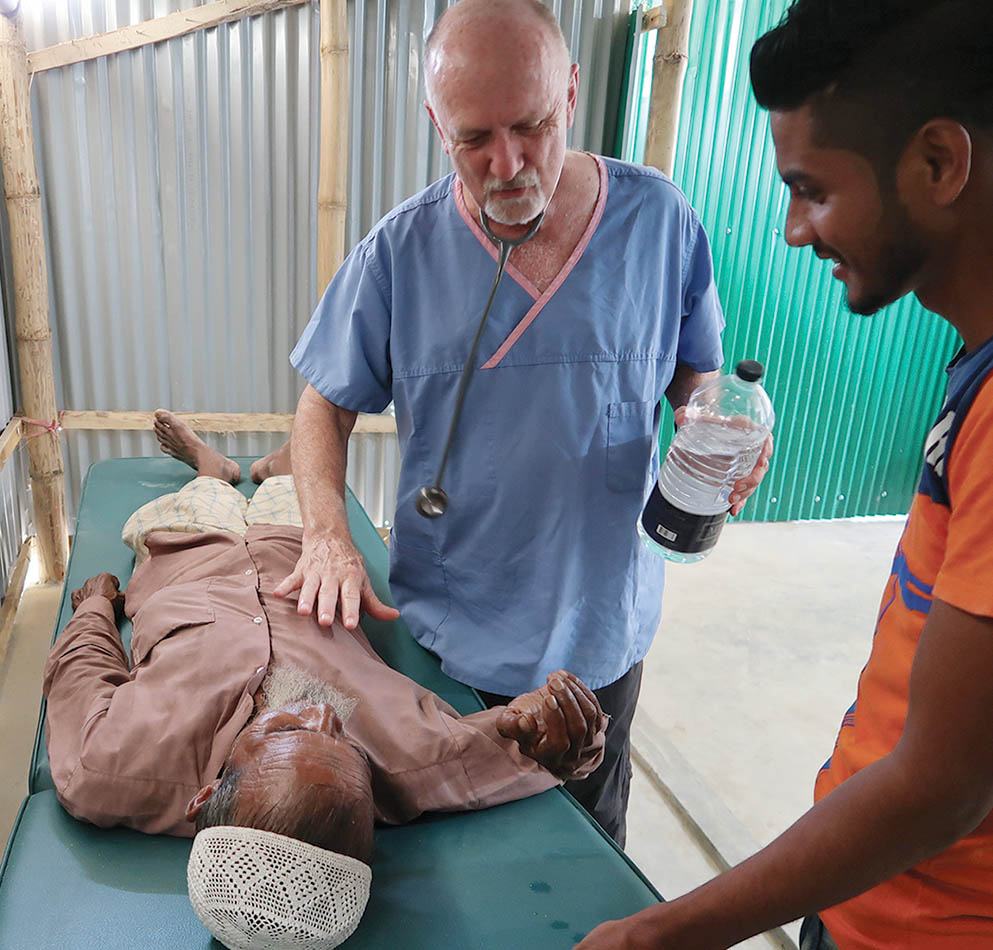
The stories start to come out as patients interact with the medical staff; when they fled Myanmar and by what route, who they lost on the way, what they experienced and witnessed. One 12-year old boy told us in clear English, “My mother was shot. She is dead. And my brother, and my brother-in-law.” An 18-year old girl came in seven months pregnant, with no husband and no family in the camp. She wouldn’t give details. Completely alone, she is facing motherhood in two months’ time.
I Couldn’t Make Her Smile.
Dr. Steve Nelson was among our first doctors to serve in the clinic. One patient in particular caught his attention for just the fear and hopelessness she felt.
“Rahjek (name changed for her protection) was one of the patients I saw today. She is eight-years-old and was looking pretty sad, he said. I asked her if she had left her smile at home, which usually works to get one to show up, but no-go for Rahjek. Even taking into account how strange it must have been for her to find herself at our clinic faced with a foreign doctor, I guess she didn’t have much to smile about. She had been ill for two months; coughing, fevers at night and losing weight, and coughing up blood. Maybe coughing up blood reminded her of her sister who had died last year in Myanmar of tuberculosis (TB).
“I asked her to cough, and what she brought up looked very infected, but no blood. By then, Mom was standing by and said ‘it doesn’t happen all the time’ – but there were some telltale signs in her chest and I was starting to talk to Mom about a special clinic not too far away that specializes in treating TB. Mom looked pretty frightened at the thought - maybe she had been through some of this with her other daughter who died. I tried to tell them that Rahjek could get well, grow fat and give her some grandbabies but she would have to take medicine for a long time. I wanted to pray with them … and wound up doing it by myself as they headed out of the clinic with my referral note, at least headed down the right path of the camp to be seen at the specialty clinic.”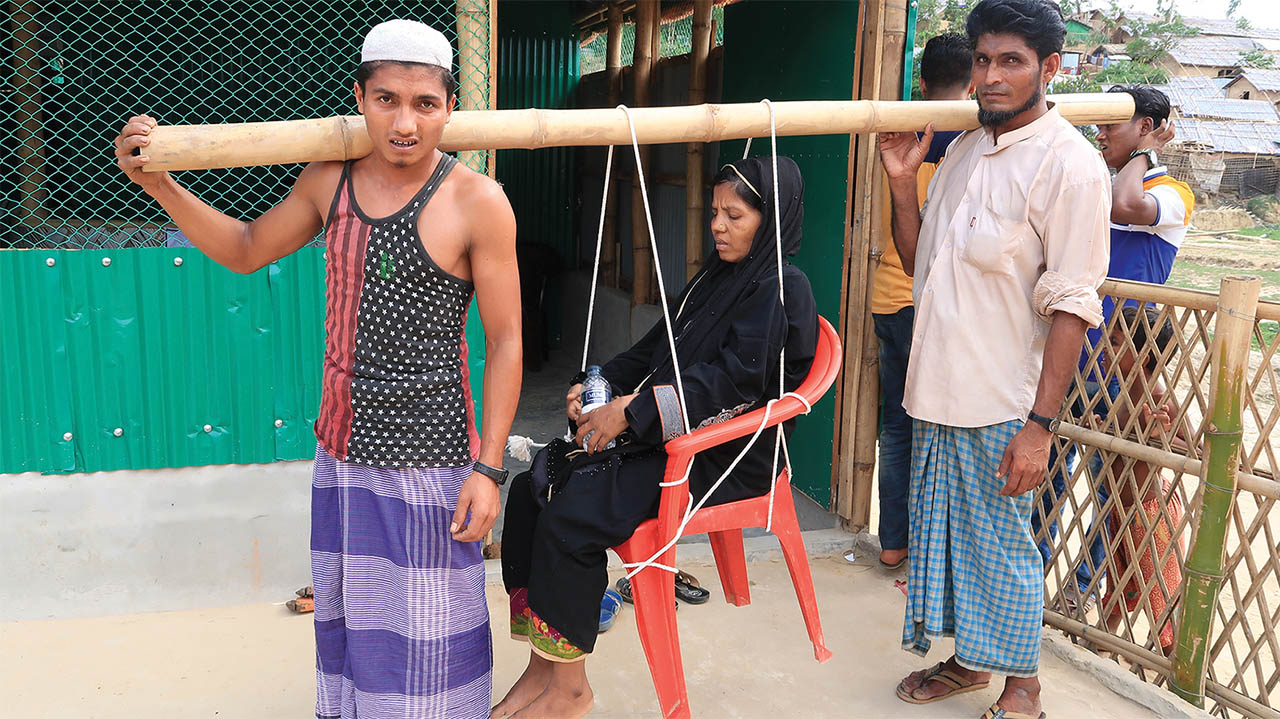
Wounds Too Deep For Medicine Alone To Heal
There are an estimated 90,000 pregnant women currently living in the 22 refugee camps in Bangladesh, so the need for pre- and post-natal care is high. Midwife Gabriella Egberth shared a story about her experience with a woman who recently lost a baby in the camp.
“She came in looking very, very weak. Her eldest son told us she had been bleeding for 5 days. Five days ago, she delivered her full-term baby, who was stillborn, in her home, Gabriella said. This was her eleventh child. I examined her and found her womb had not contracted because it still had some remnants of placenta inside. We were able to administer I.V. treatment to shrink her womb and replenish her fluids. We also could give her vitamins to treat her anemia.
“Since she has 10 children at home, and two are very sick, she would not be able to go further away to another hospital. She was with us for the entire day, and at the end of the day her husband and son carried her home on a chair they had attached to a bamboo pole.
“At the start of the day, I wondered if we could give this woman everything she needed. But by the end of the day she was stronger and could go home. She was very grateful for our help. My prayer is that she will fully recover from the physical and emotional trauma she has been through.”
These are wounds which medicine alone cannot treat. But by God’s grace we are trying to help bind up their hurt through compassionate medical care, seasoned with love and silent intercession to our Father on their behalf. The Rohingya numbers are vast, but the more we interact with them the more we see individual faces, individual stories, and precious individual souls to be loved and cherished in His name.
|
Who Are The Rohingya • A people group indigenous to the • Denied citizenship under the 1982 Myanmar Citizenship Law, left out of the 2014 census and declared as illegal immigrants • Described by the UN as one of the most persecuted minorities in the world • One of the largest stateless populations • Population estimated to be 1 million in Myanmar before the crisis • Estimated 800,000 have crossed the border into Bangladesh. Almost completely Muslim, Rohingya are a very conservative people group with their own language and culture. |
Timeline of our involvement so far:
Oct 2017 | More than 600,000 Rohingya refugees reportedly arrive in Bangladesh after fleeing violence in Myanmar.
Nov 2017 | Reach Beyond’s Asia Pacific Region visits Bangladesh to explore ways we can use Voice and Hands strategies to serve local partners reaching out to the Rohingya.
Dec 2017 | Reach Beyond is asked to provide 10,000 blankets to help Rohingya families in the refugee camp get through the cold winter nights.
Jan 2018 | Reach Beyond sends a team to the refugee camps to hand out 4,000 blankets, thanks to the overwhelming support from our donors. 6,000 more blankets were handed out in the coming days and weeks from our partner.
Feb/Mar 2018 | Reach Beyond identifies the next step in serving the Rohingya: helping our partner build and run a medical clinic in one of the refugee camps, serving 1,000 families.
Apr 2018 | Reach Beyond returns to Bangladesh for the ground breaking of the medical clinic and to assess future community development project needs.
May 2018 | The first Reach Beyond medical team arrives to the newly constructed clinic to begin seeing patients. Plans are underway to send 5-person medical teams back each month.
Colorado Springs, CO 80949-9800
800.873.4859