

MENU
(Nov. 8, 2016 - by Ralph Kurtenbach) When it comes to caring for the needs of overseas mission workers, does a one-size-fits-all system adequately answer all situations or problems?
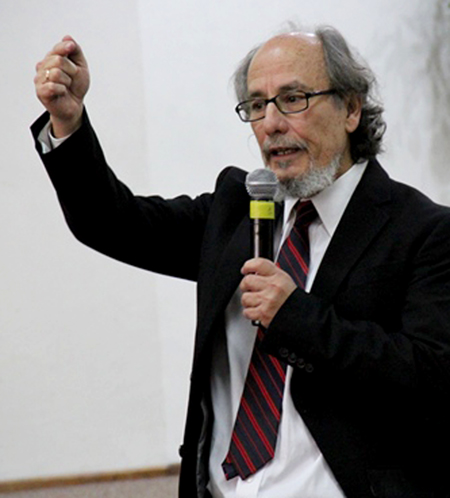 No, according to Dr. Carlos Pinto, a missionary psychologist serving in Quito, Ecuador, with Reach Beyond. A maturing church in Latin America is sending its own missionaries overseas to spread the gospel of Jesus Christ. Stresses of this cross-cultural ministry can take their toll, and so missionary care—referred to as member care—is needed.
Such help has adopted methods, structures and theoretical frameworks of Western thought. Pinto, however, suggests a path to discovering member care that is uniquely suited to the needs of Latin American missionaries.
Pinto, writing in the October 2016 edition of Evangelical Missions Quarterly (EMQ), views as one preliminary step toward an indigenous model a healthy differentiation from the prevailing member care model. He urged that care practitioners, “examine our most frequent mentalities and leave behind certain myths such as the one that says, ‘The people from the U.S. and Europe are better prepared than us Latins; they have better education and they know more.’”
“As we look at our future dialogue and cooperation within the global member care movement,” Pinto continued, “the process of our becoming psychologically independent with clear boundaries of self and others is important.”
His article also cites well-known conceptual frameworks traditionally applied to psychology (positivistic, interpretative and critical theory). Since cultures differ, so too should the conceptual structures, rather than indiscriminately building upon one framework all across the world.
Issues tied to colonization and inequalities form part of the core psyche of a Latino, for example, and “liberation social psychology has the aim to understand the psychology of oppressed and impoverished communities.”
While such issues have not interested many in North America, wrote Pinto, “thankfully, however, there is a new spirit of integration in the U.S. and other Western churches that is growing.”
Pinto cautioned against the extremes of negatively reacting against and uncritically merging into “the big body of literature on member care that has been translated from English to Spanish in order to work on finding our own identity and our own path of development.”
His description of an undue reliance in member care literature on Anglo-Saxon perspectives echoed a passionate call years earlier in Quito by a Wheaton College professor for Latinos to write about the cross-cultural connections of Old Testament characters.
“Abraham, Moses, Jonah, Esther, Ruth, Nehemiah! You name one Old Testament character who’s not in a cross-cultural relationship,” exclaimed Dr. Robert Gallagher, an associate professor at the college’s graduate school.
While teaching an April 2012 “Theological Foundation of Missions” seminar for Reach Beyond’s community development department, Gallagher referred to a “starving” need for missions texts unfettered by a Western paradigm.
Gallagher had discerned the Latin American crowd’s depth of thinking and their wisdom. Uniquely suited to voice their views on communicating the gospel across cultural contexts, they had offered him “insights about the Bible that I don’t hear at Wheaton College.” He demanded a wider audience for their message.
As a few dozen course participants listened, Gallagher exclaimed, “I’ve read a little on cross-cultural mission. There’s nothing out there!” Widely published himself in books and articles, Gallagher then made the goal within easier reach of the group.
Instead of books, he requested just articles to present missions concepts from the Latin American mindset. Then quickly pacing his listeners through the stages of publishing, he reiterated his claim of a mission community starved of non-Western viewpoints and urged, “We need you! We need you!”
Source: Reach Beyond
No, according to Dr. Carlos Pinto, a missionary psychologist serving in Quito, Ecuador, with Reach Beyond. A maturing church in Latin America is sending its own missionaries overseas to spread the gospel of Jesus Christ. Stresses of this cross-cultural ministry can take their toll, and so missionary care—referred to as member care—is needed.Such help has adopted methods, structures and theoretical frameworks of Western thought. Pinto, however, suggests a path to discovering member care that is uniquely suited to the needs of Latin American missionaries.
Pinto, writing in the October 2016 edition of Evangelical Missions Quarterly (EMQ), views as one preliminary step toward an indigenous model a healthy differentiation from the prevailing member care model. He urged that care practitioners, “examine our most frequent mentalities and leave behind certain myths such as the one that says, ‘The people from the U.S. and Europe are better prepared than us Latins; they have better education and they know more.’”
“As we look at our future dialogue and cooperation within the global member care movement,” Pinto continued, “the process of our becoming psychologically independent with clear boundaries of self and others is important.”
His article also cites well-known conceptual frameworks traditionally applied to psychology (positivistic, interpretative and critical theory). Since cultures differ, so too should the conceptual structures, rather than indiscriminately building upon one framework all across the world.
Issues tied to colonization and inequalities form part of the core psyche of a Latino, for example, and “liberation social psychology has the aim to understand the psychology of oppressed and impoverished communities.”
While such issues have not interested many in North America, wrote Pinto, “thankfully, however, there is a new spirit of integration in the U.S. and other Western churches that is growing.”
Pinto cautioned against the extremes of negatively reacting against and uncritically merging into “the big body of literature on member care that has been translated from English to Spanish in order to work on finding our own identity and our own path of development.”
His description of an undue reliance in member care literature on Anglo-Saxon perspectives echoed a passionate call years earlier in Quito by a Wheaton College professor for Latinos to write about the cross-cultural connections of Old Testament characters.
“Abraham, Moses, Jonah, Esther, Ruth, Nehemiah! You name one Old Testament character who’s not in a cross-cultural relationship,” exclaimed Dr. Robert Gallagher, an associate professor at the college’s graduate school.
While teaching an April 2012 “Theological Foundation of Missions” seminar for Reach Beyond’s community development department, Gallagher referred to a “starving” need for missions texts unfettered by a Western paradigm.
Gallagher had discerned the Latin American crowd’s depth of thinking and their wisdom. Uniquely suited to voice their views on communicating the gospel across cultural contexts, they had offered him “insights about the Bible that I don’t hear at Wheaton College.” He demanded a wider audience for their message.
As a few dozen course participants listened, Gallagher exclaimed, “I’ve read a little on cross-cultural mission. There’s nothing out there!” Widely published himself in books and articles, Gallagher then made the goal within easier reach of the group.
Instead of books, he requested just articles to present missions concepts from the Latin American mindset. Then quickly pacing his listeners through the stages of publishing, he reiterated his claim of a mission community starved of non-Western viewpoints and urged, “We need you! We need you!”
Source: Reach Beyond
P.O. Box 39800
Colorado Springs, CO 80949-9800
800.873.4859
Colorado Springs, CO 80949-9800
800.873.4859