

MENU
(Feb. 4, 2016 - by Ralph Kurtenbach) In Ecuador investigators are gathering details on a spearing attack in the country’s eastern jungle that left a man dead and his female companion wounded on Monday, Jan. 25, at the edge of the Yasuní National Reserve.
Caiga Lincaye Baihua died after his attackers threw spears at him—some reports say as many 30 times. The woman, Luciana Tweñeme Ñama Teja, and a young child survived. Ecuadorian authorities reported via Twitter that Tweñeme was hospitalized.
 “The Attorney General, acting on behalf of the State, will need to establish if there are [State] responsibilities in this newly committed crime in the Ecuadorian Amazon,” said Ecuadorian Defense Minister Fernando Cordero.
The couple are members of the Waorani indigenous group. No one was apprehended, but other Waorani denounced one of the two jungle tribes that remain in voluntary isolation—the Tagaeri and the Taromenane*. While authorities used more guarded language such as spearing “presumably by” the Taromenane, Waorani leader Alicia Cahuiya accused the Taromenane of carrying out the attack.
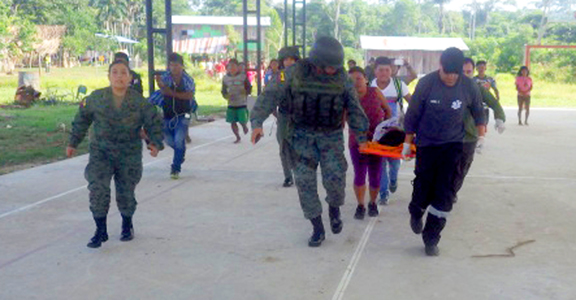
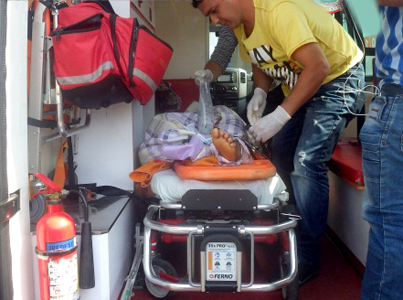
Cordero reported that an army helicopter evacuated the woman (also referred to as Onenca Tega and in some reports as Baihua’s wife) to a hospital in nearby Orellana province. Ecuadorian authorities referred to treatment of her for “spear wounds to her ribs and legs” but did not elaborate; another report listed her condition as stable.
The couple was ambushed while traveling by canoe on the Cononaco Chico River which joins the Shiripuno River. News reports state that the couple and the child were traveling between their home village (Boanamo) and another settlement (Shiripuno).
 Rivers are running low in Ecuador’s eastern jungle, and a statement by Cahuiya’s group cited a Waorani witness as saying when the spearings occurred, Baihua was using a chain saw to cut a tree that was obstructing their passage. With river flows down, the Taromenane, known as “overlanders,” had freer access throughout the jungle.
Both the Taromenane and the Tagaeri are biologically tied to the Waorani people, whose assimilation into Ecuadorian culture dates to the 1950s when Western missionaries introduced Christianity to the tribe. When the Waorani lived in relative isolation and killed all outsiders, they were referred to by a pejorative Quichua language word Auca which means “savage.”
Reacting to the incident, Waorani leaders demanded better security measures in Ecuador’s Amazon region, in keeping with Ecuador’s agreement to provide sufficient security in the country’s sparsely inhabited Amazon region. Cahuiya, vice president of the Waorani Nation of Ecuador (NAWE), told a Guayaquil newspaper, Expreso, “this is very troubling, because the Waorani are not going to kill, but [instead] those of the Taromenane.”
Both the Taromenane and Waorani have staged attacks and reprisal raids, leading to ramped-up media coverage and international concern since a mass killing by the Waorani in 2003.
After scant or no legal action by Ecuadorian authorities answered those killings, the Inter-American Commission on Human Rights made a request granted by Ecuador, for civil protection of such non-contacted peoples as the Taromenane and the Tagaeri. Ecuador’s Directorate for the Protection of Indigenous Peoples in Voluntary Isolation has overseen implementation of the agreement’s stipulations.
Ecuador’s Justice Ministry reported in a statement that it is verifying incident data as well as putting security contingencies in place in the couple’s community, Bameno. The Justice Ministry reiterated that the couple was speared in what is termed the Zona Intangible, described as an “area in which no [petroleum] extraction activity is taking place.” Its communique stands in contrast to that of human rights activist Eduardo Pichilingue who deems himself as acquainted with the late Baihua for more than a decade.
Pichilingue referred to a situation of “extreme tension” in Ecuador’s rain forest and said the ambush could have been a revenge raid for what happened in early 2013.
“There are problems that continue growing, either due to decisions by the State or by its inaction,” said Pichilingue. “The pressures of petroleum activities have continued in force.”
In March 2013 a similar episode occurred at the edge of the Yasuní Preserve that saw two elderly Waorani (Ompore Omeway and Buganey Caiga) speared to death. Then as now, the Waorani suspected—or forthrightly denounced as prime suspects—the Taromenane.
The following year (2014) approximately six Waorani men were imprisoned in Orellana province for what court proceedings determined were their roles in avenging the couple’s deaths by killing up to 30 Taromenane and kidnapping two girls as war trophies.
Initially, those charges were dismissed, but the decision was overturned. A prosecutor subsequently cited as evidence Waorani photographs indicating that they had avenged the deaths of Omeway and Caiga by killing Taromenane people. No bodies of the victims ever materialized, but as corroborating circumstantial evidence the prosecutor supplied shotgun shells, pots with traces of pellet impacts and up to 100 other items.
*The Taromenane are also known as Taadömënäni (taadö for trail and näni which is plural). So too, the term Waorani is used by outsiders, whereas Waodäni more accurately reflects the linguistic realities of the Wao language.
Sources: Reach Beyond, Associated Press, El Tiempo, Expreso, La Hora, Red Digital
Caiga Lincaye Baihua died after his attackers threw spears at him—some reports say as many 30 times. The woman, Luciana Tweñeme Ñama Teja, and a young child survived. Ecuadorian authorities reported via Twitter that Tweñeme was hospitalized.
“The Attorney General, acting on behalf of the State, will need to establish if there are [State] responsibilities in this newly committed crime in the Ecuadorian Amazon,” said Ecuadorian Defense Minister Fernando Cordero.The couple are members of the Waorani indigenous group. No one was apprehended, but other Waorani denounced one of the two jungle tribes that remain in voluntary isolation—the Tagaeri and the Taromenane*. While authorities used more guarded language such as spearing “presumably by” the Taromenane, Waorani leader Alicia Cahuiya accused the Taromenane of carrying out the attack.
Cordero reported that an army helicopter evacuated the woman (also referred to as Onenca Tega and in some reports as Baihua’s wife) to a hospital in nearby Orellana province. Ecuadorian authorities referred to treatment of her for “spear wounds to her ribs and legs” but did not elaborate; another report listed her condition as stable.
The couple was ambushed while traveling by canoe on the Cononaco Chico River which joins the Shiripuno River. News reports state that the couple and the child were traveling between their home village (Boanamo) and another settlement (Shiripuno).
Rivers are running low in Ecuador’s eastern jungle, and a statement by Cahuiya’s group cited a Waorani witness as saying when the spearings occurred, Baihua was using a chain saw to cut a tree that was obstructing their passage. With river flows down, the Taromenane, known as “overlanders,” had freer access throughout the jungle. Both the Taromenane and the Tagaeri are biologically tied to the Waorani people, whose assimilation into Ecuadorian culture dates to the 1950s when Western missionaries introduced Christianity to the tribe. When the Waorani lived in relative isolation and killed all outsiders, they were referred to by a pejorative Quichua language word Auca which means “savage.”
Reacting to the incident, Waorani leaders demanded better security measures in Ecuador’s Amazon region, in keeping with Ecuador’s agreement to provide sufficient security in the country’s sparsely inhabited Amazon region. Cahuiya, vice president of the Waorani Nation of Ecuador (NAWE), told a Guayaquil newspaper, Expreso, “this is very troubling, because the Waorani are not going to kill, but [instead] those of the Taromenane.”
Both the Taromenane and Waorani have staged attacks and reprisal raids, leading to ramped-up media coverage and international concern since a mass killing by the Waorani in 2003.
After scant or no legal action by Ecuadorian authorities answered those killings, the Inter-American Commission on Human Rights made a request granted by Ecuador, for civil protection of such non-contacted peoples as the Taromenane and the Tagaeri. Ecuador’s Directorate for the Protection of Indigenous Peoples in Voluntary Isolation has overseen implementation of the agreement’s stipulations.
Ecuador’s Justice Ministry reported in a statement that it is verifying incident data as well as putting security contingencies in place in the couple’s community, Bameno. The Justice Ministry reiterated that the couple was speared in what is termed the Zona Intangible, described as an “area in which no [petroleum] extraction activity is taking place.” Its communique stands in contrast to that of human rights activist Eduardo Pichilingue who deems himself as acquainted with the late Baihua for more than a decade.
Pichilingue referred to a situation of “extreme tension” in Ecuador’s rain forest and said the ambush could have been a revenge raid for what happened in early 2013.
“There are problems that continue growing, either due to decisions by the State or by its inaction,” said Pichilingue. “The pressures of petroleum activities have continued in force.”
In March 2013 a similar episode occurred at the edge of the Yasuní Preserve that saw two elderly Waorani (Ompore Omeway and Buganey Caiga) speared to death. Then as now, the Waorani suspected—or forthrightly denounced as prime suspects—the Taromenane.
The following year (2014) approximately six Waorani men were imprisoned in Orellana province for what court proceedings determined were their roles in avenging the couple’s deaths by killing up to 30 Taromenane and kidnapping two girls as war trophies.
Initially, those charges were dismissed, but the decision was overturned. A prosecutor subsequently cited as evidence Waorani photographs indicating that they had avenged the deaths of Omeway and Caiga by killing Taromenane people. No bodies of the victims ever materialized, but as corroborating circumstantial evidence the prosecutor supplied shotgun shells, pots with traces of pellet impacts and up to 100 other items.
*The Taromenane are also known as Taadömënäni (taadö for trail and näni which is plural). So too, the term Waorani is used by outsiders, whereas Waodäni more accurately reflects the linguistic realities of the Wao language.
Sources: Reach Beyond, Associated Press, El Tiempo, Expreso, La Hora, Red Digital
P.O. Box 39800
Colorado Springs, CO 80949-9800
800.873.4859
Colorado Springs, CO 80949-9800
800.873.4859