

This past summer, HCJB Radio in Ecuador held a parenting conference, attracting 1,200 believers and non-believers anxious to hear a Christian perspective on a subject critical to families. Local law limited the audience to 1,200 in the building, but crowds stood outside asking for the content. This wasn’t a conference dreamed up by American missionaries serving in Ecuador. It was led by nationals, organized by the now Ecuadorian-owned and operated HCJB Radio, working with the local Ecuadorian Church.
The Christian landscape of missions in Latin America has changed.
In 1931, Clarence Jones launched the world's first missionary radio station in an unreached country that had fewer than 10 radios. But according to the Joshua Project, today 95percent of the people groups in Latin America have been reached, with 15.8 percent of the population identifying as evangelical.
While there is still work to do in Latin America, the Church is poised for a new role. And that also means a new role for missions organizations, including Reach Beyond.
“Reach Beyond has to step aside so that the Latin American Church can lead the mobilization effort,” says Dan Shedd, who has served as the regional director over the Latin America Region for the past seven years. “We aren’t going to own and operate anymore, but rather partner. Our goal now is to come alongside the local Church and help to train, support and mobilize.”
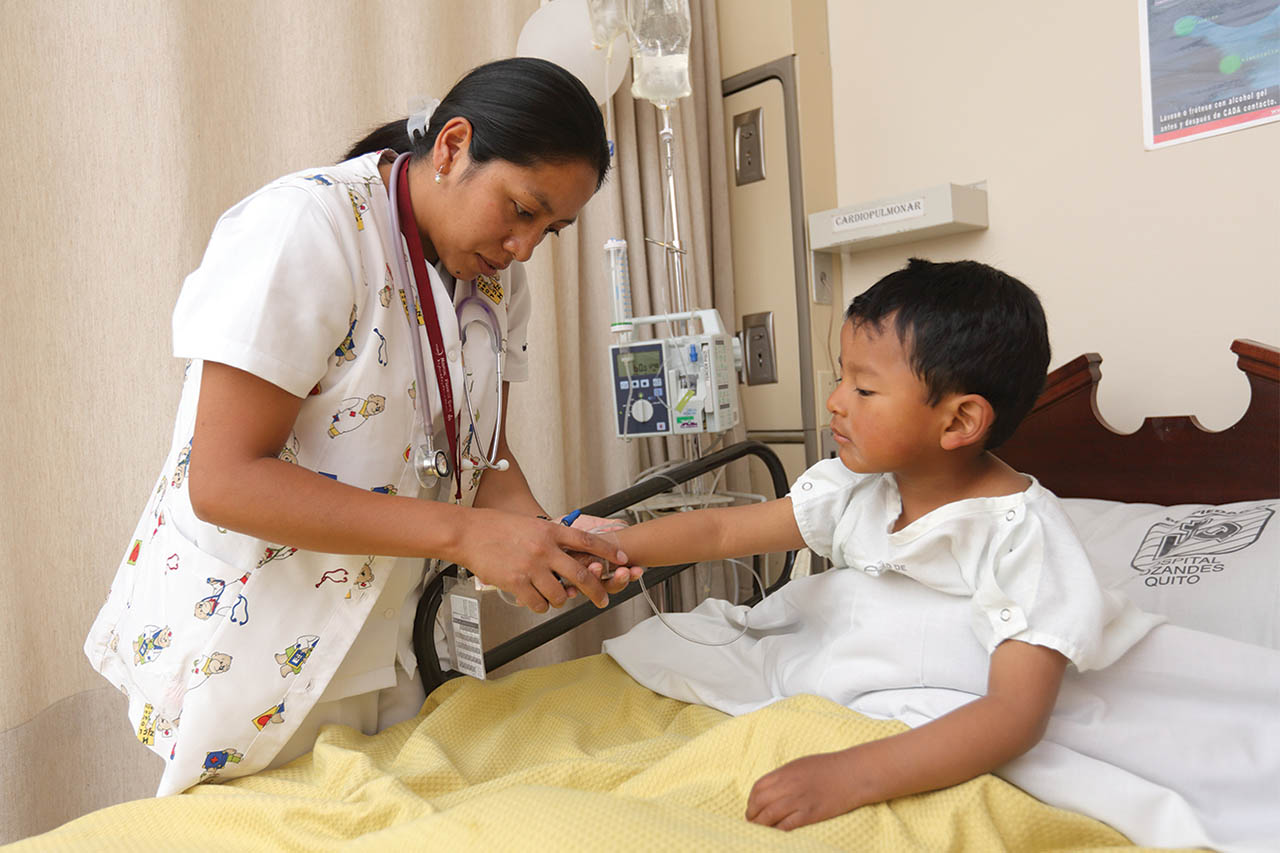 At the height of Reach Beyond’s ministry in Ecuador, it owned and operated Radio Station HCJB (The Voice of the Andes), Hospital Vozandes-Quito and Hospital Vozandes del Oriente in Shell, a high-power shortwave transmitter site broadcasting the gospel in dozens of languages around the globe, a hydro-electric plant, clinics across Ecuador, community development and training projects, a compound that supported more than 400 missionaries living and working in the area, and more. However, owning and operating so much in Ecuador took its toll on the ministry.
“When you own stuff, you spend all of your time managing stuff. The only way we were going to survive in Latin America was to divest ourselves, to empower the Church in Latin America. Because that is the organization that God actually created, not HCJB,” Dan says. “He created the Church to further His kingdom. We needed to empower nationals to take on the radio station and hospital, to rely on the local church, local donations and national staffing.”
From Owning to Empowering
Piece by piece, Reach Beyond is transferring ownership of its local ministries in Quito, Ecuador to empower the national Church to lead. We have gone from over 400 missionaries in Quito, to around 30. The reduction in resources isn’t because we no longer see value in the work; it is because the nationals can now take on the work themselves.
HCJB Radio, first launched by Clarence Jones all those years ago, has now become its own entity, run by an Ecuadorian board and managed by Anabella Cabezas. Anabella began as a secretary at HCJB, working on English programming. As time went on, she recognized the potential of media to reach into a person’s life in a non-threatening way. Now, as the director, she embraces creative strategies to communicate the gospel.
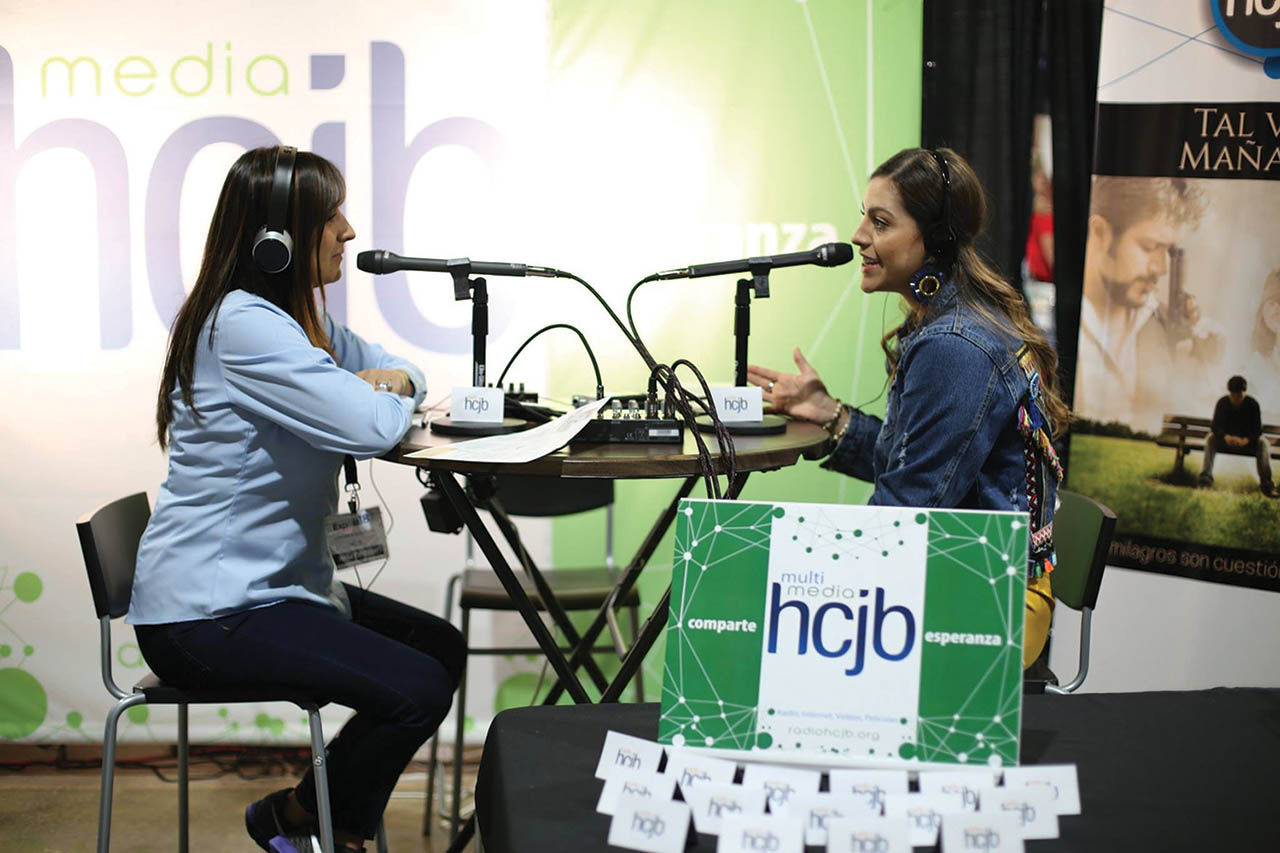
One way HCJB reaches out to the community is by putting on live shows in churches and marketplaces outside of Quito where listeners can meet the producers and put faces to the voices. In Quito, HCJB hosts three Family Life conferences per year that welcome 1200 churched and unchurched people.
“These conferences have ignited unity among the local churches in Ecuador,” says Dan. “Because they are locally-driven and produced, it reinforces the feeling of, ‘yes, we can do missions here and around the world.’”
Not only are people tuning in to the radio and turning out to the conferences, but by investing in digital technologies, HCJB is now finding an even broader reach. Reach Beyond missionary and HCJB staff member, Matt Parker, has been able to experiment in social media and online streaming to reach a younger audience. The online community is now greater than the traditional radio audience, giving the station a new platform to share the gospel in creative ways.
Over the past five years we have managed to change our audience. Before the audience was 45-60, now it's 25 and up as a result of the way we've done our programming and used social media," Matt says. "We've been able to reach the younger generation, which is great because they are the future of the Church."
In addition to handing over the “Voice” strategies to nationals, Reach Beyond is also in the process of handing over the “Hands” ministries to locals. A major piece of this is Hospital Vozandes-Quito, founded in 1955. Pretty soon after coming to Ecuador, Clarence Jones realized you couldn’t share the gospel without also taking care of more immediate physical needs. Medical clinics and caravans led to building a hospital, which became the standard for how to do medical care in Ecuador.
However, hospitals carry major liabilities and financial burdens. By turning the hospital over to a national for-profit entity, it will actually have more opportunity for partners and medical advancements. While Reach Beyond is in the process of turning over the hospital to Ecuadorian control, the ministry continues to use resources there to train people and support medical caravans.
“The hospital has been an important part of our legacy in Latin America,” says Dan. “Being a teaching hospital, it has trained many medical professionals that are now serving throughout the country in influential positions. Many of them have come to faith in Jesus while doing their residency. The hospital will continue to live out their motto, ‘To the Glory of God and the Service to Ecuador.’”
Reaching Beyond
Now that HCJB Radio and Hospital Vozandes-Quito are under Latin management, Reach Beyond can shift from leading Voice and Hands strategies to mobilizing the Latin American Church. Missions organizations have targeted Latin America for over 100 years and now second and third-generation Christians want to be mobilized for global missions. “All along we have been grounded in Latin America and reaching the unreached,” Dan says. “It started with shortwave radio. The future could be sending people.
We are at a new phase with missions. We want to explore ways we can send Latin missionaries who are called to go to unreached people groups.”
The Muslim world is more accepting of workers from Latin America than those from Western nations. Latin America has no historical conflict with Africa, the Middle East or Asia. Latin Americans also share physical and cultural traits with the Arab world. For a while, Europe and North America led the missions movement, but now churches in Africa, Asia and Latin America are poised to take the lead.
“There are so many people on fire and willing to do missions in Latin America,” says Matt Parker. “The hard part is getting the funding.” That is why the partnership model is so needed.
 Training the Next Leaders
Reach Beyond’s credibility from years of working in Ecuador has positioned the organization well for now equipping and training leaders out of Latin America.
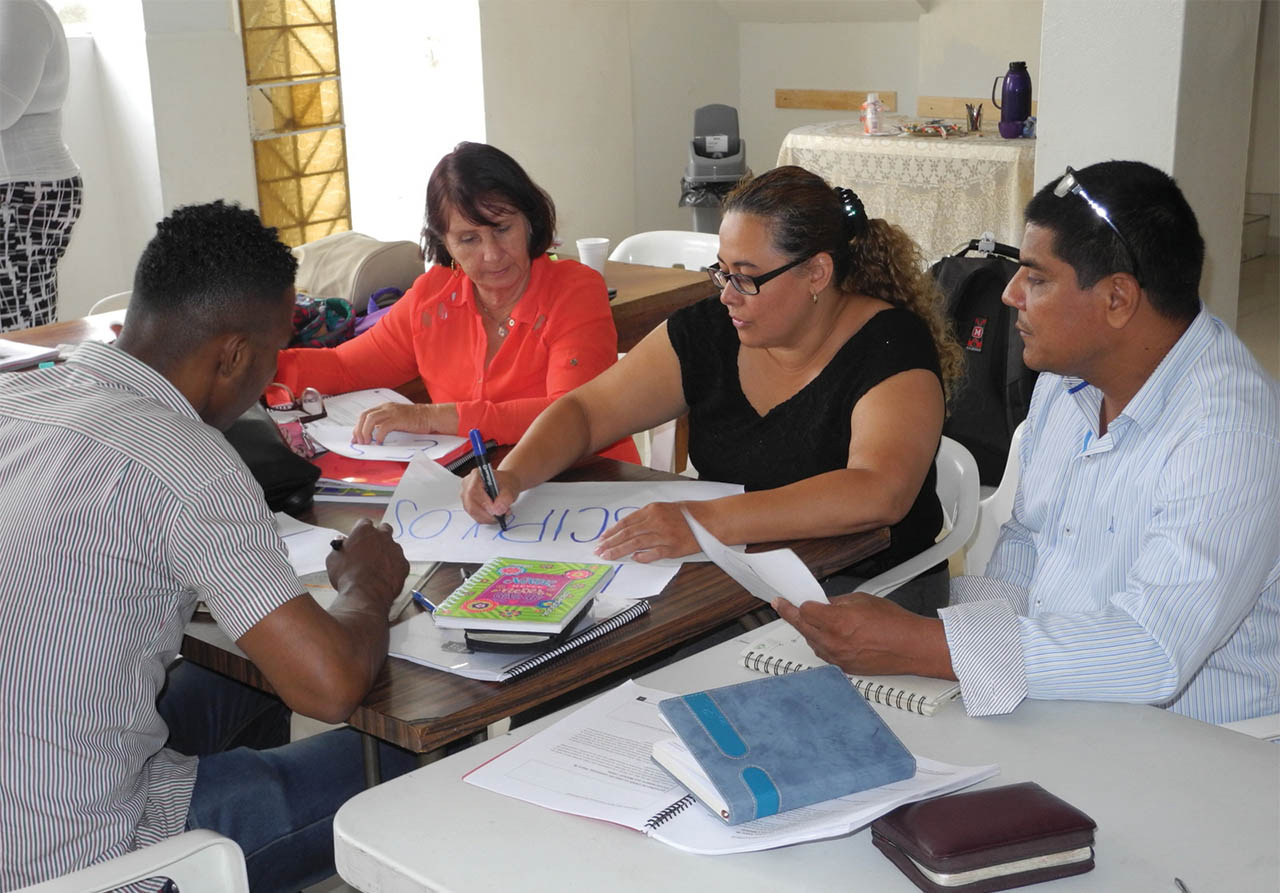
Reach Beyond started Apoyo (Spanish word for "support") in 1992 to train ministry leaders in Ecuador, Peru, Cuba and Argentina to disciple younger believers. To complete the two-year training, about 30 or 40 pastors meet monthly for an all-day retreat where they study leadership themes and build relationships with one another. The program has come alongside the Church in areas of leadership development that has empowered many, especially lay workers, with good teaching resources. The model has a multiplying effect of training trainers.
Another training program out of Ecuador, Corrientes, provides practical missions training, covering subjects such as ministry strategy, cultural adjustment and member care. Corrientes started in 2009 to respond to the difficulties that Latin missionaries were facing serving so far away from their community. Training workshops addressed issues such as “Evangelism through Digital Media,” and “What is Preparation of a Cross-Cultural Missionary?” Corrientes has mentored 54 Latin missionaries to serve around the world. So far, Corrientes has only mentored missionaries sponsored by other mission agencies, but Dan looks forward to the day Ecuador will send Latin American Reach Beyond missionaries to work among unreached people groups.
“The Corrientes project is still an important piece,” says Curt Cole, VP of Global Ministries. “We want to be a part of mobilizing the Church for global missions. They are already doing it, but our legacy gives us the respect and trust to help.”
 A Legacy in Latin America
“The legacy that we have in the Latin America Region is allowing us to have the global ministry we have now,” says Curt. “The legacy gives us trust. We’ve been there so many years. We did Voice and Hands. We launched our community development there. We launched digital media there. Thirty years ago, we began regionalizing, taking the story beyond Ecuador and doing it closer to the unreached people groups. And now we are at the next phase.”
Because nationals are able to take over the Voice and Hands initiatives in Ecuador, Reach Beyond is able to divert more resources to the unreached areas of the world, specifically in Asia, Africa and the Middle East. However, even resources in Latin America are being used to help these regions.
Believers from 35 different countries worship at English Fellowship Church in Quito. An Iranian couple in the congregation use an old Reach Beyond station to broadcast the gospel in Persian to unreached people groups in North Africa and the Middle East.
“We played a role in evangelization of the Latin church. Pastors have told us that without HCJB, the growth of the Church in Ecuador would have been much slower,” says Curt. “We see that fruit, and now we are excited about how Latin America will be able to serve on the global stage.”
Colorado Springs, CO 80949-9800
800.873.4859